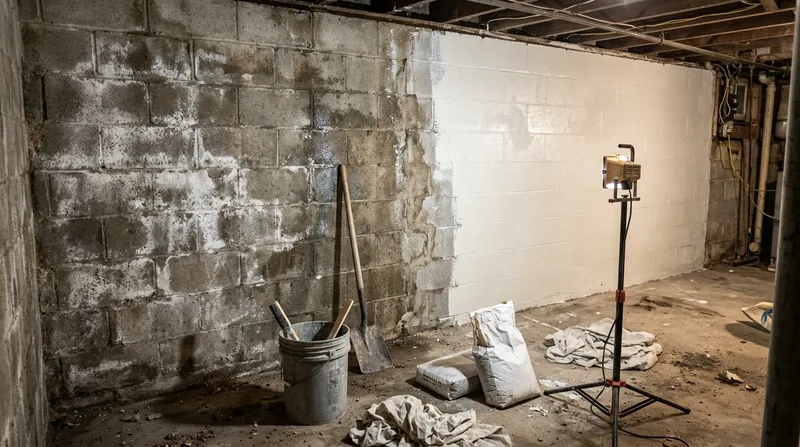




Basement Wall Sealing in Knoxville: Stop Damp Walls Before They Rot the Mortar
If you own a home in Fourth and Gill, Old North Knoxville, or a 1950s brick ranch in West Hills, you already know what Knoxville weather does to a foundation. Basement Wall Sealing in Knoxville is the targeted fix for walls that sweat, seep, and bloom with white salt stains after every spring storm. We work on old brick and limestone foundations, poured walk-out walls in Farragut, and split-level lower levels on the sloped lots of Bearden and Holston Hills. The city sits in the Ridge-and-Valley Appalachians beside the Tennessee River, with thick red clay over karst limestone, so water moves sideways through the soil and pushes hard against your walls. Sealing is not the answer to every wet basement, and we will tell you straight when it is and when it is not. Start with a free basement inspection so we can identify the actual failure mode before anyone touches a wall.
Why Knoxville Basements Take On Water Through the Walls
Knoxville gets some of the heaviest rainfall in the region, and the red clay residual soil here does not drain quickly. Water perches against the foundation, raises the local water table, and drives hydrostatic pressure into every hairline crack and porous mortar joint. Old brick foundations in Fort Sanders wick moisture like a sponge, while poured walls in Hardin Valley show seepage along form ties and cold joints. Efflorescence is the tell: the white powder is salt pushed out by water moving through the concrete or brick.
- Hydrostatic pressure forces water through pores and cracks that look solid from the inside.
- Freeze-thaw cycles in January and February open hairline cracks wider each winter.
- Downspouts that dump beside the footing saturate the soil along the uphill wall.
- Steep lots in Sequoyah Hills and Island Home Park send runoff straight at the basement wall.
- Homes under oaks and tulip poplars deal with roots that redirect water toward the foundation.
Sealing addresses the wall surface itself, but it cannot hold back a water table pressing from outside, and we say so on the first visit.
Key info: A homeowner in Fountain City called us about a musty smell and paint peeling off the block wall. The wall was damp but not streaming. A penetrating sealer and efflorescence removal solved it. A neighbor two streets over had standing water after every storm, and that one needed an interior perimeter drain, not a sealer.
For official guidance on permits and contractor requirements in Tennessee, check the Tennessee Board for Licensing Contractors before you hire anyone.
How We Seal Basement Walls in Knoxville, Step by Step
We do not sell a sealer as a cure-all. The first step is always diagnosis: we look at the wall, the grading, the downspouts, and the history of water after rain. If the problem is minor dampness and surface porosity, sealing works. If water is under pressure, we explain the alternatives, including an interior drain tile system, before you spend money on the wrong fix.
- We inspect the wall for cracks, honeycombing, form ties, and efflorescence, and we note where water enters.
- We remove efflorescence with a stiff brush and a mild acid wash, then rinse and let the wall dry.
- We open and clean any active cracks so the sealer or injection material can bond to sound concrete.
- We apply a penetrating sealer for damp masonry or a membrane sealer where surface protection is needed.
- We correct grading and downspout extensions so runoff moves away from the footing.
- We schedule a follow-up after the next heavy rain to confirm the wall stays dry.
Every step is documented, and you get a written summary of what we found and what we did.
Key info: On a 1920s bungalow in Old North Knoxville, the brick wall was damp but never wet to the touch. We removed efflorescence, applied a breathable penetrating sealer, and extended two downspouts. The wall stayed dry through the next spring. On a Powell walk-out with water running across the floor, we recommended drainage instead of sealing.
Sealing Approaches We Use on Knoxville Basement Walls
Not every wall takes the same product. Brick, block, and poured concrete behave differently, and the presence of hydrostatic pressure changes the recommendation. Here is how the main approaches compare.
| Approach | Description | Best for |
|---|---|---|
| Penetrating sealer | Soaks into the concrete or masonry and blocks capillary movement without trapping moisture. | Damp walls with efflorescence and no standing water. |
| Membrane sealer | Forms a flexible coating on the wall face that bridges hairline cracks. | Poured walls with surface seepage and minor cracking. |
| Crack injection | Epoxy or polyurethane injected through ports to fill and seal active cracks. | Isolated cracks that leak after rain, before sealing the wall. |
| Parging repair | Replaces deteriorated mortar on old brick and block walls before sealing. | Victorian and bungalow foundations with crumbling mortar joints. |
| Drainage correction | Regrades soil and extends downspouts to relieve pressure at the wall. | Walls that stay wet because runoff sits against the foundation. |
We choose the approach after the inspection, not before, because the wall tells us what it needs.
Basement Wall Sealing Cost in Knoxville: What to Expect
Most residential wall sealing projects in Knoxville start at $1,500, and the final number depends on wall length, wall material, and how much prep the surface needs. A single damp wall in a Karns ranch is a smaller job than a full perimeter on a 1920s brick foundation in Fourth and Gill. Efflorescence removal, parging repair, and crack injection add labor. Access matters too: a wall behind stored items or a finished partition takes longer to reach.
We recommend getting two or three written estimates and comparing scope, not just price. Ask whether the quote includes surface prep, efflorescence removal, and a follow-up visit. A low number that skips prep is not a bargain. Our pricing overview lays out how we build an estimate so you can compare apples to apples.
Hiring a Basement Wall Sealing Contractor Near Me in Knoxville
Knoxville has plenty of contractors who will sell you a sealer, and not all of them will tell you when sealing is the wrong answer. Use this checklist before you sign anything.
- Confirm the contractor is licensed and insured, and ask for a certificate of insurance before work starts.
- Get at least two written estimates that list surface prep, materials, and cleanup.
- Ask for local references, ideally homeowners with the same wall material and age as yours.
- Ask who pulls any permit required for structural or drainage work, and verify with the local building department.
- Check HOA rules for exterior work and any historic district requirements in older Knoxville neighborhoods.
We are a Basement Health Association member and we put our findings in writing, so you can decide with clear information. Reach out through our contact page to schedule an inspection.
Basement Wall Sealing in Knoxville: Pricing Guide
| Service | Price | Details |
|---|---|---|
| Single wall penetrating sealer | Starting at $1,500 | Includes efflorescence removal, surface prep, and one coat of breathable sealer. |
| Full perimeter membrane sealing | Starting at $2,800 | Covers all accessible walls, crack prep, and flexible membrane coating with cleanup. |
| Crack injection before sealing | Starting at $450 per crack | Epoxy or polyurethane injection for active leaks, priced by crack length and access. |
| Parging repair on old masonry | On estimate | Crumbling mortar on brick or block needs an on-site look before pricing. |
| Travel | Included | In Knoxville and surrounding areas, no separate call-out or mileage fee. |
| Estimate | Free | Response within 24h at (865) 507-4795, no obligation to book. |
Indicative pricing, the exact cost depends on square footage, finish, and site access. Free personalized estimate within 24h at (865) 507-4795.


